
Written by Hibt Crypto Research Team
Updated: August 2026
As the RWA (Real World Assets) and tokenized stock markets expand, more traditional equities are entering the crypto trading ecosystem. In the past, investors who wanted exposure to Tesla had to open a brokerage account and buy TSLA shares through conventional securities channels. Today, several platforms offer tokenized representations of Tesla stock, allowing crypto users to gain price exposure to Tesla via blockchain‑based assets.
TSLAX is one of the most talked‑about assets in this trend.
When users first search for “what is TSLAX,” “TSLAX crypto,” “TSLAX stock,” or “Tesla tokenized stock,” the core questions are: Is TSLAX the same as Tesla stock? Does buying TSLAX equal buying TSLA? How is TSLAX different from a typical crypto token? How do I buy it? And does it have real investment potential?
In one sentence: TSLAX is a tokenized representation of Tesla equity designed to provide blockchain‑based exposure to Tesla’s stock value.
In plain English: TSLAX is a blockchain‑based, Tesla‑related tokenized asset. It is not an official cryptocurrency issued by Tesla, nor is it a meme coin. It falls squarely into the categories of tokenized stocks and RWA assets.
According to an Hibt announcement, the TSLAX (Tesla xStock) trading pair TSLAX/USDT is now live on the SOL network. The announcement also notes that xStocks are tokenized stocks backed 1:1 by underlying assets, offer DeFi composability, and provide non‑U.S. users with a legal claim to the underlying stock value.
1. What Is TSLAX? Why Is Tesla Stock Moving Into Crypto?
This section answers: What exactly is TSLAX? Is it Tesla stock?
TSLAX typically refers to Tesla xStock, a tokenized asset tied to Tesla Inc. common stock. CoinGecko describes Tesla xStock as a tokenized representation of Tesla Inc. common stock, allowing users to hold and trade Tesla equity exposure on blockchain networks.
That means TSLAX is not a native cryptocurrency like Bitcoin, nor an Ethereum‑style smart‑contract platform asset, nor a meme token with no underlying backing.
It is best understood as:
- A tokenized stock
- An RWA asset
- A price‑exposure vehicle for Tesla stock
- An on‑chain financial representation of an equity
So for newcomers, here’s the simple distinction:
- TSLA is the traditional stock ticker for Tesla in securities markets.
- TSLAX is the on‑chain tokenized asset linked to Tesla stock.
- TSLAX’s price generally tracks Tesla’s stock performance.
- But TSLAX is not the same as holding TSLA directly in a brokerage account.
You can check live market data via the TSLAX real‑time quote page for price, volume, and trend analysis.
2. Why Is Tesla a Prime Target for Tokenization?
This section explains why Tesla is well‑suited for tokenization.
Tesla is one of the world’s most followed technology and automotive companies. It is not merely an EV maker — it is building a long‑term narrative around AI, autonomous driving, energy storage, robotics, and manufacturing platforms.
In its 2025 10‑K filing, Tesla stated that it focuses on bringing AI into the real world, with products and services including Full Self‑Driving (FSD), Robotaxi, and the Optimus humanoid robot. At the same time, the company continues to design, develop, manufacture, sell, and lease electric vehicles, as well as energy generation and storage systems.
That’s why Tesla stock attracts global investors. The investment thesis goes beyond vehicle sales — it encompasses:
- Electric Vehicles
- AI
- Autonomous Driving
- Robotaxi
- Energy Storage
- Robotics
- Battery Technology
- Manufacturing Platforms
Given its high visibility, deep liquidity, volatility, and global investor familiarity, Tesla is a natural candidate for tokenized stock offerings when traditional equities enter the crypto space.
3. Why Are Traditional Stocks Moving Onto Blockchains?
This section answers: Why can stocks be put on chain?
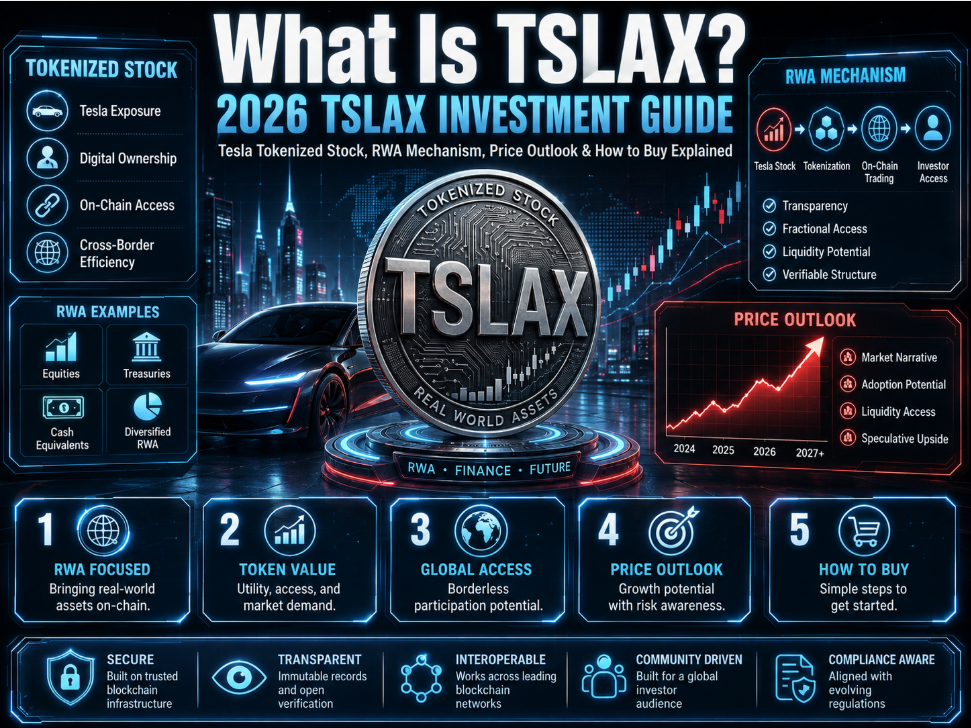
The traditional stock investment path typically looks like this:
Investor → Broker → Stock Exchange → Clearing → Custody → Market Hours
Tokenized stocks offer an alternative route:
Investor → Wallet or Crypto Platform → Tokenized Stock → Blockchain → 24/7 or extended trading access → Potential DeFi integration
According to the xStocks official page, xStocks are 1:1 backed tokenized assets for U.S. stocks and ETFs, tradable 24/7, cross‑chain compatible, and supported by underlying securities. Each xStock is backed 1:1 by underlying assets held in regulated custody, can be redeemed for cash equivalent or the underlying asset, and supports fractional purchases.
This is the core value proposition of RWA: bringing real‑world assets into the blockchain financial system.
For crypto users, the appeal of tokenized stocks includes:
- Gaining exposure to traditional stock prices using a crypto account
- Trading with stablecoins like USDT or USDC
- More flexible trading hours (24/7)
- Potential integration with DeFi lending, collateralization, and portfolio management
- Combining traditional equities with on‑chain assets in a single investment framework
However, investors must understand that tokenized stocks are not “risk‑free stocks” and do not automatically grant full shareholder rights. The actual rights depend on the issuer, custody structure, redemption mechanisms, compliance restrictions, and platform rules.
4. TSLAX vs. Tesla Stock (TSLA): What’s the Difference?
This section answers: Is buying TSLAX the same as buying Tesla stock?
The short answer: No, not exactly.
TSLA is the traditional Tesla stock traded on securities exchanges through brokerage accounts, operating under securities trading, custody, clearing, and regulatory frameworks.
TSLAX is a tokenized stock asset tied to Tesla’s share price, offering economic exposure to Tesla within crypto or on‑chain trading environments.
Here’s how they compare:
TSLA
TSLAX
Nature
Traditional stock
Tokenized representation of stock exposure
Trading venue
Stock exchanges / brokerages
Crypto platforms / blockchain networks
Rights defined by
Securities law
Issuer terms, platform rules, legal documents
Custody
Brokerage / clearinghouse
Regulated custodian (for the backing asset)
CoinGecko notes that TSLAX works as follows: the issuer (Backed) buys underlying Tesla stock and holds it via a regulated custodian. For each share of Tesla stock held, one TSLAX token is minted on supported blockchains, with 1:1 backing verified by public proof‑of‑reserves and independent security agents.
But this does not mean all TSLAX holders automatically have the same voting rights, dividend entitlements, or account protections as traditional TSLA shareholders. Always read the platform terms, issuer documentation, and regional restrictions.
5. Does TSLAX Represent Shareholder Rights?
This is a critical question every tokenized‑stock investor must carefully consider.
While TSLAX provides economic exposure to Tesla’s stock price, investors must verify:
- Do I have voting rights?
- Do I receive dividends?
- Can I redeem for underlying Tesla stock?
- Is it merely a price‑tracking instrument?
- Who is the custodian?
- Is there genuine asset backing?
- Is there proof of reserves?
- Is the product available in my jurisdiction?
The xStocks partnership page states that xStocks are tokenized representations of select U.S. stocks and ETFs, each 1:1 backed by underlying securities. It also clarifies that xStocks are not offered to U.S. persons or within the U.S., and are restricted in Canada, the U.K., Australia, and other regions. (xStocks)
Thus, one of the core risks of TSLAX is not technological — it’s legal and structural. Investors must ask not only “Will TSLAX track TSLA?” but also “What rights do I actually hold?”
6. What Legal Issues Should You Consider Before Investing in TSLAX?
This section explains why tokenized stocks face regulatory scrutiny.
Tokenized stocks sit at the intersection of securities markets and crypto markets, so they are subject to two sets of rules.
First, securities regulation.
If TSLAX represents economic exposure to Tesla stock, it may involve securities laws, investor suitability, regional restrictions, disclosure requirements, custody, and redemption rules.
Second, crypto regulation.
Since TSLAX can be traded on‑chain, transferred via wallets, or used in DeFi, it also touches on digital asset trading, platform compliance, smart contract security, and cross‑border liquidity.
Third, platform‑specific rules.
Different exchanges handle tokenized stocks differently — some only allow trading (no withdrawal), some support on‑chain wallets, some restrict certain geographies, and some may suspend trading or redemptions.
Clear regulation can accelerate RWA adoption, but regulatory uncertainty can also limit tokenized stock growth. You can read the CLARITY Act explainer to understand how U.S. digital asset regulation, the SEC, CFTC, and market structure affect RWA assets.
7. The RWA Mechanism Behind TSLAX: How Does Tesla Stock Become a Token?
This section answers: How can a stock become a token?
RWA stands for Real World Assets — the tokenization of real‑world assets on blockchain. RWAs include stocks, bonds, commodities, real estate, funds, Treasuries, ETFs, and corporate assets.
Tokenized stocks are among the easiest RWAs to understand.
The basic flow is:
Tesla Stock → Custodian → Token Issuance → Blockchain → Investor Trading
The core logic: the token does not generate value out of thin air. Instead, through underlying asset backing, custody structures, and price‑tracking mechanisms, it reflects the value of a real equity.
For TSLAX, if it is 1:1 mapped to Tesla stock exposure, then trading TSLAX is essentially trading a Tesla‑related on‑chain asset, not a native protocol token.
The xStocks official page emphasises that xStocks bring high‑volume U.S. stocks and ETFs on‑chain and are backed 1:1 by underlying securities.
8. Why Is RWA Becoming a Major Crypto Trend?
In the past, crypto markets primarily traded digitally native assets — BTC, ETH, DeFi tokens, meme coins, and stablecoins.
In the future, crypto markets will likely trade not just “coins” but on‑chain versions of real‑world assets:
- Stocks can be tokenized.
- ETFs can be tokenized.
- Bonds can be tokenized.
- Commodities can be tokenized.
- Real estate can be tokenized.
- Even brand assets may be tokenized.
The long‑term significance of RWA is that it moves crypto from a purely speculative arena toward a broader financial infrastructure market.
For example, the article What Is FXRP? shows how XRP can be mapped into DeFi ecosystems via asset representation. While FXRP is not a stock‑type tokenized asset, it illustrates a common trend: more assets are seeking on‑chain liquidity, collateral capabilities, and composable financial applications.
TSLAX represents another path: traditional equity assets entering the crypto market.
9. Tesla’s Business Value – What Are You Actually Investing In When You Buy TSLAX?
This section answers: Where does TSLAX’s underlying value come from?
Investing in TSLAX is not a bet on a new coin — it is a bet on Tesla’s enterprise value and the price performance of TSLA stock.
Tesla’s core business can be broken into four pillars.
1. Electric Vehicles
Tesla remains one of the world’s most important EV manufacturers. In 2025, it produced approximately 1.66 million consumer vehicles and delivered about 1.64 million.
2. Energy Storage
Tesla’s energy business is gaining increasing investor attention. In 2025, the company deployed 46.7 GWh of energy storage products. In Q1 2026, it deployed 8.8 GWh.
3. AI & Autonomous Driving
In its Q1 2026 report, Tesla stated it continues to improve and deploy FSD and push forward with its Robotaxi service. It also noted that since the Robotaxi service launch in June 2025, it has been expanding and optimising that service.
4. Robotics
Tesla is developing and commercialising AI robots, including Optimus, and is preparing and investing for large‑scale production.
So the underlying investment thesis for TSLAX is not a “new crypto narrative” — it is Tesla’s long‑term enterprise value story.
10. What Are Tesla’s Future Growth Drivers?
Tesla’s future growth logic rests on five main fronts.
1. FSD Development
If FSD capabilities continue to improve and gain regulatory and commercial adoption, Tesla’s value model could shift from one‑time car sales to recurring software and mobility‑service revenues.
2. Robotaxi
Robotaxi is one of Tesla’s most important long‑term narratives. If autonomous ride‑hailing scales commercially, Tesla could evolve from a manufacturer into an AI‑driven mobility platform.
3. Energy Business
Global demand for energy storage could provide long‑term runway for Tesla’s energy segment — grid storage, commercial, and residential systems all have growth potential.
4. AI Capabilities
Tesla possesses real‑world driving data, AI training infrastructure, and autonomous driving systems, making its investment case increasingly resemble that of an AI company rather than just an automaker.
5. Optimus Robotics
If the robotics business achieves commercial success, it could open entirely new markets — though this remains a high‑uncertainty long‑term option.
In its Q1 2026 report, Tesla also noted that its next phase of production growth will be driven by autonomous driving progress, new products, the next‑gen platform, internal battery manufacturing capabilities, and cost reductions, while advancing Cybercab trial production, AI compute, and Optimus preparations.
11. How Does Tesla’s Stock Value Affect TSLAX?
TSLAX’s price should theoretically track Tesla’s stock value.
The fundamental chain:
Tesla Business Growth → TSLA Stock Value → TSLAX Price
If Tesla’s business performs strongly, TSLA rises, and TSLAX will typically follow. If Tesla’s valuation declines, earnings suffer, or sentiment turns negative, TSLAX is likely to drop as well.
However, investors should note that TSLAX’s price may not always equal TSLA’s price at every moment. It can be affected by tokenized‑stock liquidity, exchange quotes, on‑chain trading depth, market premiums/discounts, regional restrictions, and trading‑hour differences.
Thus, analysing TSLAX requires looking at two layers:
- Tesla’s fundamentals.
- TSLAX’s market structure as a tokenized stock.
12. TSLAX Investment Thesis: Why Are Crypto Users Interested in Tesla Tokenized Stock?
This section explains what makes TSLAX attractive to crypto investors.
TSLAX appeals to crypto users for three primary reasons.
1. Global access.
Traditional stock investing requires a brokerage account, regional eligibility, trading hours, and broker access. Tokenized stocks may allow more non‑U.S. users to gain Tesla exposure through crypto platforms. The xStocks page notes that its assets are available in over 110 countries and support fractional purchases starting at $1.
2. Crypto portfolio integration.
TSLAX lets investors manage BTC, ETH, stablecoins, RWA assets, and equity exposure within a single crypto portfolio — no need to constantly switch between a brokerage account and a crypto wallet.
3. Future DeFi composability.
CoinGecko mentions that TSLAX could be used as collateral in lending markets, DEX liquidity pools, or structured financial products in supported scenarios. This suggests tokenized stocks may become more than just “on‑chain stock prices” — they could evolve into DeFi building blocks.
Of course, these advantages depend on compliance, liquidity, custody, and risk controls.
13. How Does TSLAX Differ From a Typical Crypto Token?
The biggest difference between TSLAX and an ordinary crypto token is the source of value.
Typical crypto tokens are evaluated by:
- Protocol usage
- Network user growth
- Community momentum
- Token utility
- On‑chain transaction volume
- Ecosystem incentives
- Market narrative
TSLAX, on the other hand, should be evaluated by:
- Tesla’s enterprise value
- TSLA stock price
- Tokenisation structure
- Custody mechanisms
- Redemption rules
- Platform liquidity
- Regulatory restrictions
- Price‑tracking accuracy
This means investing in TSLAX requires understanding both equity investing and crypto asset risks.
If you only read crypto charts without understanding Tesla’s business, you are likely to misjudge TSLAX.
If you only know traditional stocks but are unfamiliar with wallets, tokenisation, on‑chain liquidity, and regulatory constraints, you may underestimate TSLAX’s risks.
14. How to Buy TSLAX – A Step‑by‑Step Guide for Beginners
This section answers: How do I actually buy TSLAX?
Step 1: Confirm the token issuer and asset details.
Before investing, verify that TSLAX is indeed Tesla xStock, that the TSLAX/USDT pair is listed, that the underlying asset is linked to Tesla stock, and that the source is official or reputable.
Step 2: Choose a supported platform.
Hibt’s announcement confirms TSLAX/USDT is live on the SOL network. You may also find TSLAX on other platforms, but always double‑check the asset name and contract address to avoid fake tokens.
Step 3: Prepare USDT (or other supported assets).
On a centralised exchange, you typically need USDT or another stablecoin. For on‑chain purchases, you may need native gas tokens and USDC or equivalent.
Step 4: Select the trading pair and place an order.
Beginners are advised to use limit orders rather than large market buys, as tokenized stocks may have bid‑ask spreads, especially when liquidity is thin.
Step 5: Confirm receipt of assets.
After purchase, verify your TSLAX balance in your exchange account or wallet. If withdrawal to a self‑custodial wallet is supported, check the network, contract address, and wallet compatibility.
Step 6: Manage asset security.
If held on an exchange, enable strong account security (2FA, withdrawal whitelists). If held in a personal wallet, protect your seed phrase, private keys, and smart contract approvals.
15. How to Check TSLAX Live Prices and Market Data
You can access real‑time TSLAX data via the Hibt quotes page:
Key metrics to watch:
- Current price
- 24h change
- Trading volume
- Order book depth
- Historical trends
- Comparison with TSLA stock price
- Platform support status
- Premium/discount to underlying stock
If TSLAX’s price deviates significantly from TSLA, investigate liquidity, trading hours, platform rules, and redemption mechanisms.
16. TSLAX Price Prediction – How to Analyse Future Value
This section addresses: Will TSLAX go up?
Rather than a fixed numerical forecast, a more disciplined approach is scenario analysis.
You can consult the TSLAX price prediction tool for reference, but predictive models should never replace your own research on Tesla fundamentals, RWA market growth, and token structure.
Bull Case
If Tesla maintains competitive EV sales, FSD and Robotaxi achieve commercial breakthroughs, energy storage continues growing, Optimus opens new long‑term opportunities, and the RWA/tokenized‑stock market expands, TSLAX could benefit.
In this scenario, upside comes from two sources: rising TSLA stock value and increased demand for tokenized stocks.
Neutral Case
If Tesla grows steadily but faces balanced competitive pressure, margin constraints, AI deployment timelines, and market valuations, TSLAX is likely to track TSLA’s normal fluctuations — not as an explosive independent asset, but as an on‑chain proxy for Tesla exposure.
Bear Case
If Tesla’s valuation declines, EV competition intensifies, autonomous driving commercialisation disappoints, energy growth slows, or RWA regulatory restrictions tighten, TSLAX could come under pressure. Additionally, if TSLAX liquidity drops, platform trading halts, or price‑tracking mechanisms fail, the token itself may face extra risks.
17. TSLAX and the Ethereum Ecosystem – Why Does Tokenized Stock Need Crypto Infrastructure?
This section explains why tokenized stocks rely on blockchain infrastructure.
Tokenized stocks require supporting infrastructure: smart contracts, wallets, stablecoins, custody, exchanges, bridges, and DeFi protocols.
Ethereum and its ecosystem are especially important because a large share of RWAs, stablecoins, and DeFi applications are built around the EVM. The xStocks partnership page notes that xStocks are issued on Solana, Ethereum, Mantle, TON, and Ink, with more blockchain integrations in progress.
You can also review the ETH price prediction to understand how Ethereum’s ecosystem could affect tokenized stocks, RWAs, and DeFi markets over the long term.
If tokenized stocks become more deeply integrated into DeFi, we may see applications such as:
- Collateral – using TSLAX to borrow stablecoins
- Lending – depositing TSLAX into lending markets for yield
- Liquidity – providing TSLAX pairs on DEXs
- Portfolio management – combining TSLAX with BTC, ETH, USDC, and other RWAs in on‑chain portfolios
However, the availability of these use cases depends on protocol support, compliance, liquidity, and risk parameters.
18. TSLAX Compared to Other RWA Trends
This section places TSLAX in the broader asset‑tokenisation trend.
TSLAX represents the tokenisation of corporate equity.
Similarly, What Is ALABB? helps explain the RWA logic behind Alibaba‑related tokenized assets.
What Is POPMART? shows how consumer brands and IP assets are entering digital finance discussions — POPMART’s value comes from collectible IP, community, brand growth, and global consumption.
What Is QUID? leans more toward Web3 cross‑chain infrastructure and application tokens, with a completely different value source.
Different asset classes have different drivers:
- TSLAX → Tesla enterprise value
- ALABB → underlying corporate assets
- POPMART → brand equity and IP economics
- QUID → cross‑chain application and ecosystem growth
Investors should not look only at token prices — first, identify the asset class.
19. TSLAX Risk Analysis – What You Must Know Before Investing
This section answers: Is TSLAX safe?
1. Tesla business risks
Tesla faces EV competition, price wars, margin changes, autonomous driving regulation, supply chain issues, manufacturing costs, global demand fluctuations, and valuation swings. In its 2025 10‑K, Tesla also noted that trade and fiscal policy changes create uncertainty in automotive and energy markets, potentially impacting supply chains, cost structures, demand, and profitability.
2. Valuation risk
Tesla typically enjoys high market attention and a valuation premium. If the market lowers expectations for AI, Robotaxi, or robotics, both TSLA and TSLAX could decline.
3. Tokenised‑asset risks
TSLAX involves custody, issuance, redemption, on‑chain transfers, smart contracts, and platform rules. Even if the underlying Tesla stock performs well, TSLAX may deviate due to low liquidity or platform restrictions.
4. Rights and legal risk
TSLAX is not necessarily equivalent to direct TSLA ownership. Confirm voting rights, dividend entitlements, redemption rights, and legal claims.
5. Liquidity risk
If TSLAX trading volume is low, bid‑ask spreads widen, and large orders may cause slippage. CoinGecko shows TSLAX trading on multiple platforms with 24h volume and market cap data, but these figures change in real time — always check current conditions before trading.
6. Regulatory risk
xStocks has clear geographic restrictions — not offered to U.S. persons or within the U.S., and restricted in Canada, the U.K., Australia, and others. (xStocks) This underscores that tokenized stocks are not a globally unrestricted product.
7. Crypto security risk
On‑chain assets require attention to both investment decisions and asset safety. You can read the Coldcard hack deep‑dive to understand the importance of hardware wallets, private keys, seed phrases, contract approvals, and asset migration.
20. TSLAX vs. Other Crypto Investment Theses
This section helps newcomers build asset‑classification skills.
Infrastructure tokens – e.g., MUON — derive value from technical adoption, developer integration, node networks, and Web3 infrastructure demand.
AI crypto – e.g., What Is AIRH? — value may come from AI applications, robotics, data, compute, or asset‑tokenisation trends.
RWA tokens – TSLAX falls into RWA and tokenized‑stock category. Its value is not driven by on‑chain community sentiment, but by Tesla’s enterprise assets, stock price performance, and tokenised‑stock market structure.
Native crypto assets – BTC, ETH, SOL, etc. — value comes from network consensus, supply models, on‑chain usage, and ecosystem development. For example, SOL analysis involves inflation, staking, and burns, whereas TSLAX analysis focuses on Tesla and tokenisation structure.
So you cannot analyse TSLAX the same way you would a meme coin, nor exactly like a traditional stock — it is a hybrid asset between traditional equities and crypto markets.
21. How to Decide If TSLAX Is Worth Investing In
This section provides a final investment framework.
Evaluate TSLAX on three layers.
Layer 1: Underlying asset
- Is Tesla’s fundamentals healthy?
- Are EV sales and margins stable?
- Is energy storage growing?
- Are FSD and Robotaxi progressing?
- Does Optimus have credible long‑term commercial potential?
- Is TSLA valuation reasonable?
Layer 2: Token structure
- Is TSLAX backed by real underlying assets?
- Is the custody arrangement transparent?
- Is there proof of reserves?
- Is redemption supported?
- Are there regional restrictions?
- Is trading liquidity sufficient?
Layer 3: Market trends
- Is the RWA market expanding?
- Are tokenized stocks being adopted by more platforms?
- Are crypto users willing to allocate to traditional equity exposure?
- Is the regulatory environment supportive?
- Is DeFi gradually accepting tokenized stocks as collateral or portfolio components?
If all three layers are reasonably clear, TSLAX becomes a more serious candidate for research.
22. Recommended Data Modules for Enhanced E‑E‑A‑T
To boost the page’s Experience, Expertise, Authoritativeness, and Trustworthiness, consider adding these dynamic modules:
Tesla Business Metrics
- Vehicle deliveries, automotive revenue, energy deployments, gross margins, cash reserves, FSD/Robotaxi updates, Optimus milestones.
- Rationale: TSLAX price is grounded in Tesla’s enterprise value.
TSLAX Asset Metrics
- Token supply, trading volume, liquidity, market depth, available exchanges, premium/discount to TSLA, proof‑of‑reserves status.
- Rationale: The key question for any tokenized stock is whether it effectively tracks the underlying stock.
RWA Comparison Table
- Side‑by‑side differences between TSLAX, traditional TSLA stock, and an average crypto token.
- TSLAX → economic exposure to Tesla stock
- TSLA → traditional shareholder rights and securities‑market rules
- Ordinary crypto token → protocol usage and token utility
Risk Metrics
- Regulatory, custody, price‑deviation, liquidity, corporate, and wallet‑security risks.
- Rationale: RWAs are not risk‑free; they combine traditional financial risks with crypto risks.
23. FAQ – Frequently Asked Questions About TSLAX
What is TSLAX?
TSLAX is a tokenized asset designed to provide exposure to Tesla equity through blockchain infrastructure. CoinGecko describes Tesla xStock as a tokenized representation of Tesla Inc. common stock, allowing users to hold and trade Tesla equity exposure on blockchain networks.
Is TSLAX the same as Tesla stock?
No. TSLAX is not the same as directly holding TSLA stock through a traditional brokerage account. It may provide economic exposure, but investors must verify ownership rights, custody, redemption rules, and regional restrictions.
What is the difference between TSLAX and TSLA?
TSLA is the traditional Tesla stock traded on exchanges via brokers. TSLAX is a tokenized stock that can be traded on supported platforms or blockchain markets. Their prices may be correlated, but trading methods, holding structures, and legal rights differ.
Is TSLAX a cryptocurrency?
TSLAX can be traded in crypto markets, but it is not a native cryptocurrency like BTC or ETH. It is better understood as an RWA and tokenized‑stock asset.
How to buy TSLAX?
Users can buy TSLAX on supported trading platforms. Before purchasing, verify the official asset details, trading pair, underlying asset support, network, and geographic restrictions. Check the TSLAX real‑time quote for market data.
How should I interpret TSLAX price predictions?
TSLAX price forecasts should combine Tesla stock performance, Tesla’s fundamentals, RWA market development, tokenised‑asset liquidity, and regulatory conditions. You may refer to the TSLAX price prediction tool for reference, but never treat predictions as guaranteed returns.
Can TSLAX be used in DeFi?
On supported protocols and platforms, tokenized stocks like TSLAX may be used for collateral, lending, liquidity provision, and portfolio management. CoinGecko mentions that TSLAX can be used as collateral, DEX liquidity, or in structured products, but actual availability depends on platform support and compliance restrictions.
Is TSLAX suitable for long‑term investment?
That depends on Tesla’s fundamentals, token structure, liquidity, regulatory environment, and your personal risk tolerance. TSLAX is best suited for investors willing to research Tesla stock and RWA asset structures — it is not for beginners who are unaware of tokenisation risks to take large positions.
24. Conclusion – Is TSLAX Worth Investing In?
TSLAX is worth watching, but it should not be simplistically viewed as “Tesla stock on‑chain, therefore it will go up.”
Strengths:
- TSLAX connects to a globally followed, high‑profile tech company — Tesla.
- Tesla’s long‑term narratives span EV, AI, Robotaxi, Energy Storage, and Robotics.
- Tokenized stocks offer crypto users a familiar way to gain Tesla‑related exposure.
- TSLAX is part of the RWA trend, potentially bridging traditional equities and crypto finance.
- If DeFi support for tokenized stocks grows, TSLAX could see more collateral, lending, and portfolio use cases.
Risks:
- TSLAX is not the same as directly holding TSLA stock.
- Tokenized stocks face regulatory, custody, redemption, and geographic restrictions.
- Tesla’s stock is inherently volatile and valuation‑sensitive to market expectations.
- TSLAX may suffer from low liquidity or price deviations.
- On‑chain assets also require careful attention to wallet security and platform risks.
For newcomers, the three most important steps before investing in TSLAX are:
1. Research Tesla’s fundamentals. Don’t just look at the token price — understand EV, FSD, Robotaxi, energy storage, and Optimus progress.
2. Confirm TSLAX’s structure. Is it 1:1 backed? Who is the custodian? Is redemption available? Are there geographic restrictions?
3. Manage risk. TSLAX carries stock risk, crypto risk, RWA regulatory risk, and liquidity risk — all at once.
A more rational approach: first observe market behaviour via the TSLAX real‑time quote, then combine insights from the TSLAX price prediction, ETH price prediction, CLARITY Act explainer, What Is FXRP?, What Is ALABB?, What Is POPMART?, What Is QUID?, What Is AIRH?, and the Coldcard hack deep‑dive to build a complete understanding of RWA, tokenized stocks, and crypto investing.
TSLAX’s long‑term value ultimately depends on two questions: Can Tesla continue to create enterprise value? And can the tokenized‑stock market mature in terms of compliance, custody, liquidity, and DeFi composability? For investors, TSLAX is not just another new coin — it is an important case study of how traditional equity assets are entering the on‑chain financial system.